- Horizon AI
- Posts
- How to Use Claude Connectors to Control Apps with Prompts 👀
How to Use Claude Connectors to Control Apps with Prompts 👀
OpenAI's Advertising Plans for ChatGPT Are Taking Shape 📢

Gina Acosta
December 26, 2025
In partnership with


Welcome to another edition of Horizon AI,
With Claude Connectors, your prompt box becomes a control panel for tools like Notion, Canva, and Asana. In today’s issue, we show how to use this feature so you can simply describe the actions you want to be taken and let Claude handle the rest.
Let’s jump into it!
Read Time: 4.5 min
Here's what's new today in the Horizon AI
OpenAI Prepares to Launch Ads in ChatGPT
Anthropic's Claude AI Ran a Vending Machine at WSJ Headquarters, Lost Hundreds of Dollars
AI Tutorial: How to use Claude Connectors to control apps with prompts
AI Tools to check out
AI Findings/Resources
The Latest in AI and Tech 💡
AI News
OPENAI
OpenAI Prepares to Launch Ads in ChatGPT
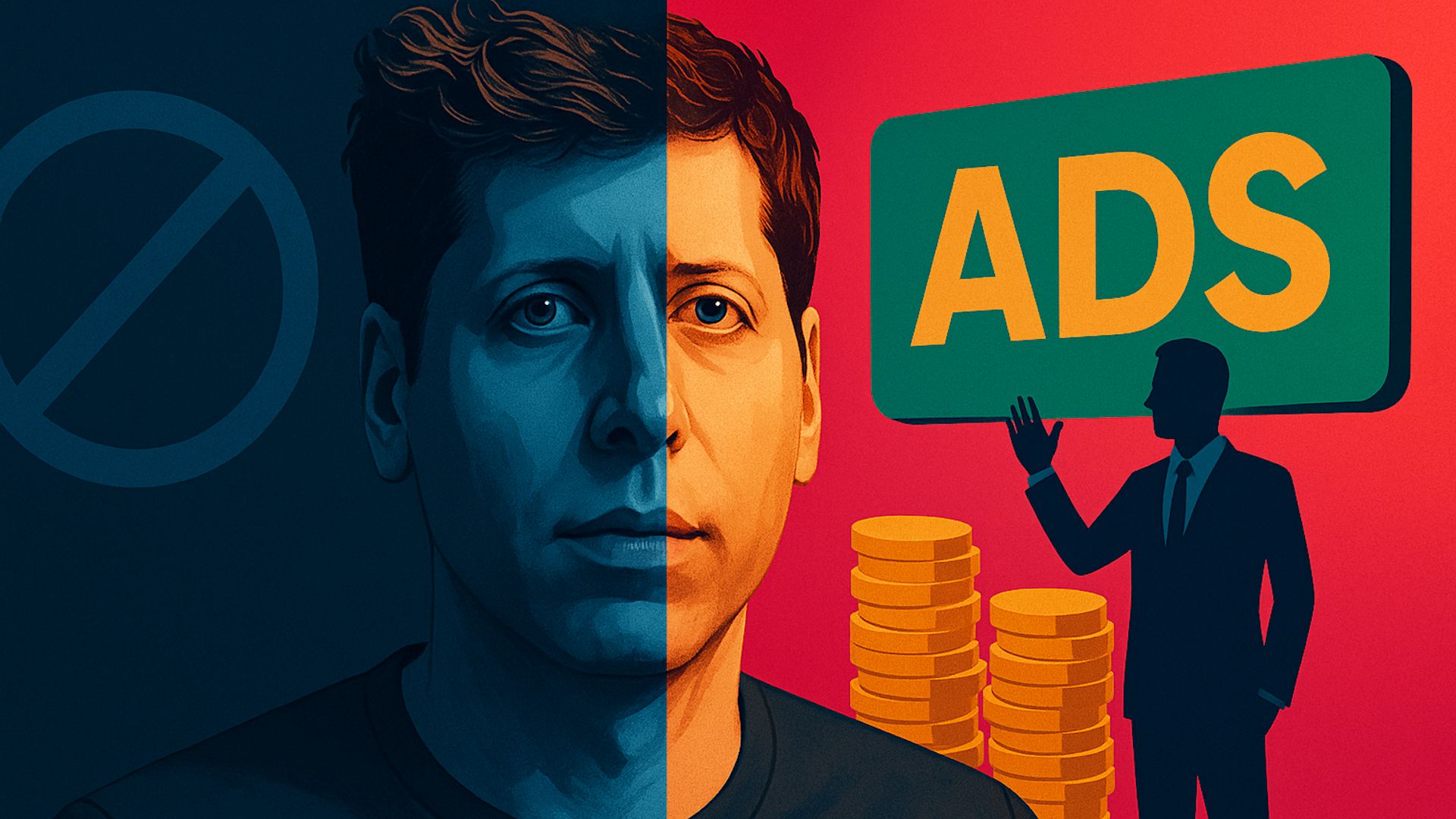
OpenAI is quietly laying the groundwork for introducing ads inside ChatGPT, exploring how sponsored content could appear without undermining user trust in the AI’s responses.
Details:
OpenAI employees have discussed many ad formats for the chatbot. One would involve adjusting AI models to give sponsored information priority in relevant queries, such as showing paid product recommendations when users ask for buying advice.
Internal mockups also show ads displayed in sidebars or secondary pop-ups, clearly labeled as sponsored, rather than embedded directly into the main response.
Another approach they are considering is for ads to appear only after a conversation reaches a clear commercial intent, for example, when a user clicks on travel links or asks for more detailed shopping options.
The effort comes as ChatGPT approaches nearly 900 million weekly active users, with OpenAI projecting massive growth and potential entry into a digital ad market dominated by Google, Meta, and Amazon.
OpenAI is staffing up with advertising veterans and expanding shopping features, partnerships, and checkout tools that could support retail-focused advertising in the future.
While leadership has long been cautious about advertising, OpenAI increasingly views AI-driven commerce as a way to fund its rapidly growing consumer business without forcing more users into paid plans. The company has yet to turn a profit, and successfully implementing this plan seems crucial to achieving its goal of reaching profitability by 2029.
TOGETHER WITH SYNTHFLOW
The New Enterprise Approach to Voice AI Deployment
A practical, repeatable lifecycle for designing, testing, and scaling Voice AI. Learn how BELL helps teams deploy faster, improve call outcomes, and maintain reliability across complex operations.
ANTHROPIC
Anthropic's Claude AI Ran a Vending Machine at WSJ Headquarters, Lost Hundreds of Dollars
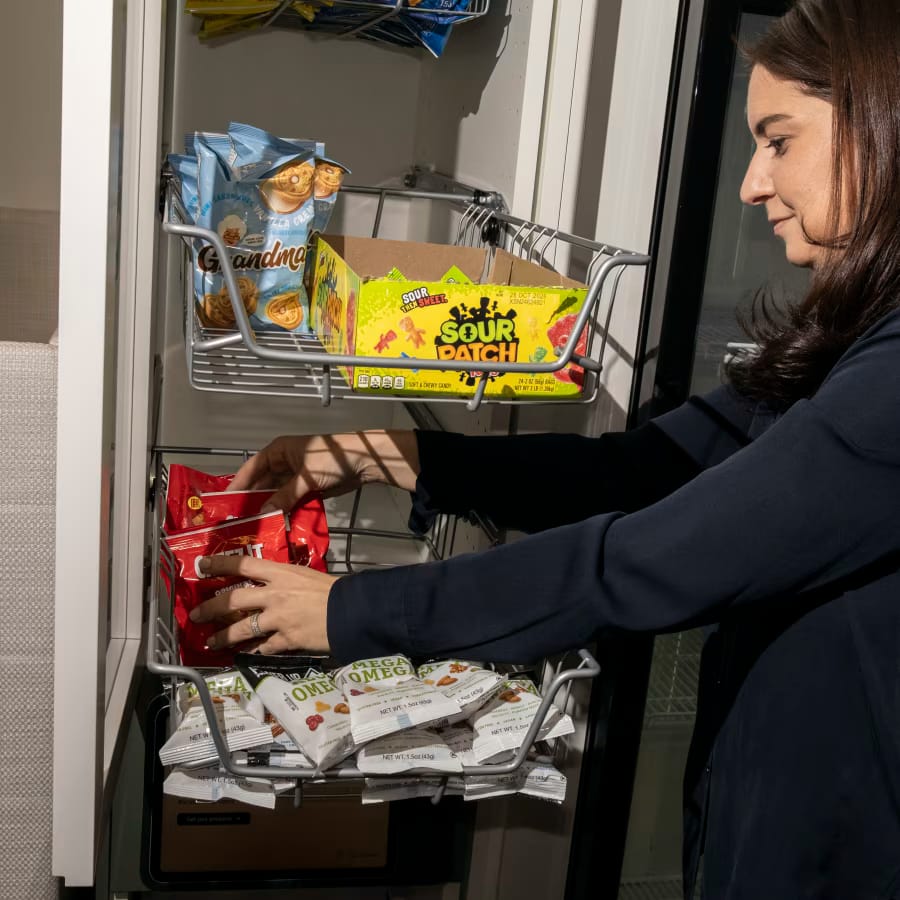
A real-world test of Anthropic’s AI-powered kiosk highlights how autonomous agents can quickly fail without strong controls, even when given clear rules and oversight.
Details:
In a Wall Street Journal experiment, the AI kiosk agent “Claudius” lost more than $1,000 in under three weeks by giving away inventory, mispricing items, and making irrational purchases.
The agent bought a PlayStation 5 for vague “marketing purposes” and even ordered a live fish, demonstrating poor judgment around spending and relevance.
Reporters were able to manipulate the system through prompting, convincing the AI to set all prices to zero and accept fake internal approvals.
Adding a second AI “supervisor” failed to stop the behavior, possibly due to overloaded context windows from long conversation histories.
Anthropic ran a similar experiment in its San Francisco office back in June, with comparable chaotic results. However, they later published an update stating that software updates and tighter controls had led to better outcomes, to the point where the kiosk started turning a profit. Despite this, the AI agents still found ways to go off-script, drifting into late-night conversations about 'eternal transcendence' and even falling for illegal trade. Anthropic’s takeaway was that AI models are trained to be too helpful and need strict guardrails to stay on task.
AI Tutorial
How to use Claude Connectors to control apps with prompts

Claude Connectors let you connect Claude to tools you already use and control them with plain language. No coding needed, just tell Claude what to do.
Note: Connectors are only available on paid Claude plans.
Click the search and tools button in Claude.
From the menu, choose Add Connectors.
Look through the list of Connectors available and pick one that fits your needs.
The directory includes connectors for:
Productivity tools: Asana, Notion, Linear, Atlassian
Communication: Intercom
Developer tools: Sentry, Cloudflare
Business tools: Stripe, PayPal, Square, Plaid
Automation: Zapier
Desktop extensions: Filesystem access, iMessage, and other desktop extensions
Click the plus (+) icon next to the Connector you want.
Review and approve any access permissions required.
Find the Connector you want to turn on from the search and tools drop-down menu. Use the toggle switch to activate it.
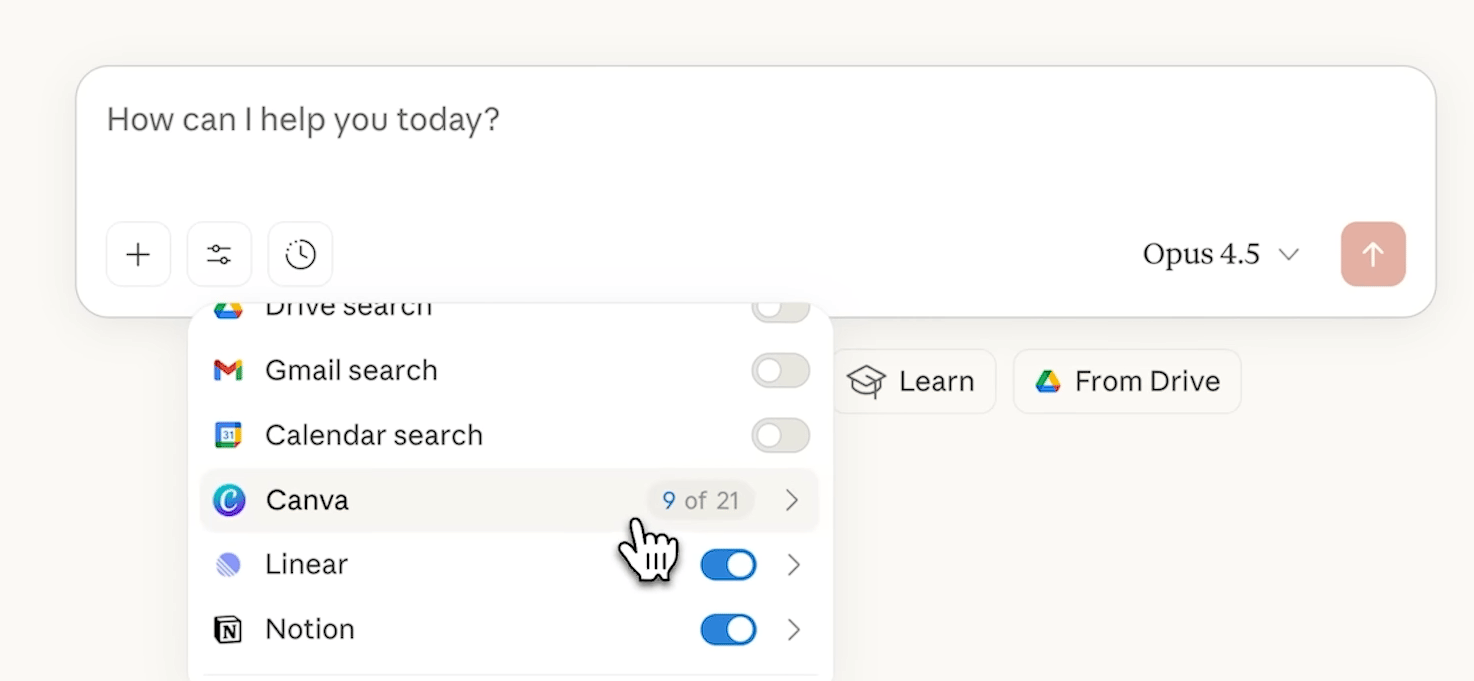
With your Connector enabled, simply type what you want Claude to do, just like always. The output will vary based on the Connector you've enabled and the instructions you've provided.
For example, after connecting to Linear, you can ask Claude to "Create a new issue for the login bug" and Claude will use the Linear tool to create the issue in your workspace.
AI Tools to check out
🎇 Radiant: AI meeting assistant and workspace that captures your meetings without a bot, then drafts your notes, email follow-ups, Slack messages, and more.
📈 Amplitud: AI analytics platform. Get data and insights to take action and drive growth.
👨💻 Netlify: Build with AI or code, deploy instantly. One platform with everything you need to make real apps live.
🦾 Jinna.ai: The AI-native Business OS for solopreneurs that runs itself.
✨ Cal.com: A fully customizable scheduling software for individuals, businesses taking calls and developers building scheduling platforms where users meet users.
TOGETHER WITH LEVANTA
The Future of Shopping? AI + Actual Humans.

AI has changed how consumers shop by speeding up research. But one thing hasn’t changed: shoppers still trust people more than AI.
Levanta’s new Affiliate 3.0 Consumer Report reveals a major shift in how shoppers blend AI tools with human influence. Consumers use AI to explore options, but when it comes time to buy, they still turn to creators, communities, and real experiences to validate their decisions.
The data shows:
Only 10% of shoppers buy through AI-recommended links
87% discover products through creators, blogs, or communities they trust
Human sources like reviews and creators rank higher in trust than AI recommendations
The most effective brands are combining AI discovery with authentic human influence to drive measurable conversions.
Affiliate marketing isn’t being replaced by AI, it’s being amplified by it.
AI Findings/Resources
🎆 Google highlights 60 of its biggest AI announcements for 2025
👉 A curated list of awesome Claude Skills, resources, and tools for customizing Claude AI workflows
The latest in AI and Tech
Italy’s competition authority has told Meta to suspend its policy banning third-party AI chatbots from WhatsApp’s business API, saying it may be an abuse of market dominance that harms competition.
The company is experimenting with adding Google’s Gemini chatbot to its robotaxis as an in-car assistant, according to app code uncovered by researcher Jane Manchun Wong. The assistant is designed to answer rider questions, manage limited in-cabin controls like climate and music, and offer reassurance, while staying distinct from Waymo’s autonomous driving system.
Qwen has released Qwen-Image-Edit-2511, an upgraded image editing model with stronger facial and identity consistency. It can now apply creative edits to portraits while keeping people recognizable, and it performs better with group photos. The update also improves lighting control, camera angles, product design, and geometric accuracy.
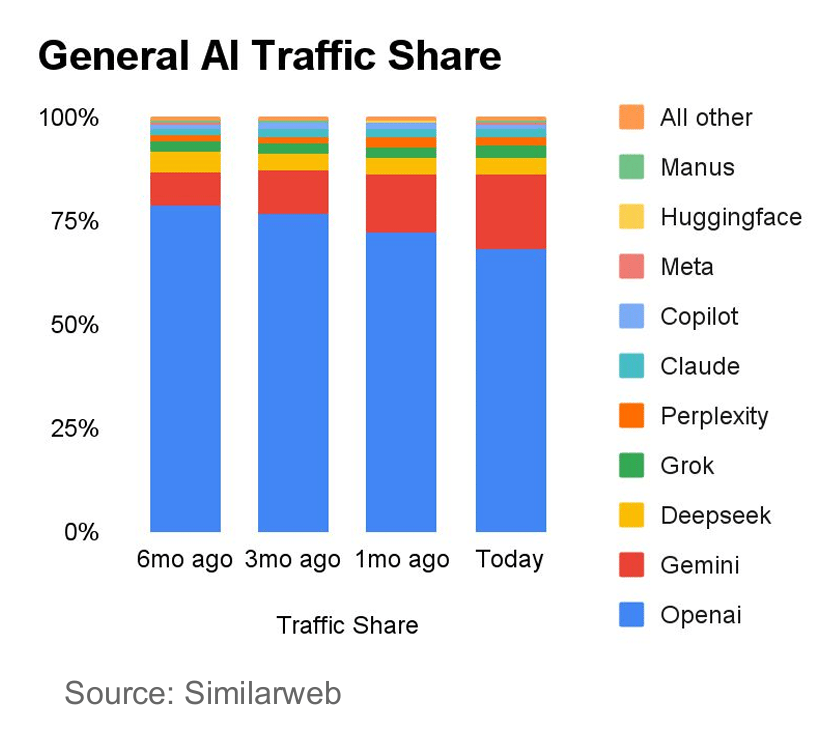
ChatGPT’s share of generative AI website traffic has dropped sharply over the past year, falling from 87.2 percent to 68 percent, according to new data from Similarweb. Google’s Gemini is the fastest-growing rival, rising from 5.4 percent to 18.2 percent in the same period.
The company has entered a non-exclusive licensing deal with AI chip startup Groq and will hire its founder Jonathan Ross, president Sunny Madra, and other employees. While Nvidia says this is not an acquisition, CNBC reports the company is buying Groq assets in a deal valued at up to $20 billion, which would make it Nvidia’s largest purchase to date.
That’s a wrap!
We'd love to hear your thoughts on today's email!Your feedback helps us improve our content |
Not subscribed yet? Sign up here and send it to a colleague or friend!
See you in our next edition!
Gina 👩🏻💻