- Horizon AI
- Posts
- How to turn off Google’s AI Overviews in web searches 👇
How to turn off Google’s AI Overviews in web searches 👇
Meta's Superintelligence team releases its first AI model: Muse Spark ✨

Gina Acosta
April 09, 2026
In partnership with


Welcome to another edition of Horizon AI,
Many times when you Google something, you're greeted by an AI-generated paragraph at the top that answers your question before you even scroll. That's Google's AI Overviews.
But studies show these aren't always accurate or well-sourced, and some people are simply tired of AI summaries taking over their search results and want to bring back the classic blue links, with no AI panels or distractions. In this issue, we show you how.
Let’s jump into it!
Read Time: 4.5 min
Here's what's new today in the Horizon AI
Meta Unveils First Model from Its Superintelligence Team
OpenAI Releases Framework for AI Child Safety Policies
AI Tutorial: How to remove AI Overviews from Google Search
AI Tools to check out
AI Findings/Resources
The Latest in AI and Tech 💡
AI News
META
Meta Unveils First Model from Its Superintelligence Team

Meta has introduced Muse Spark, the first model from its new Superintelligence Labs, closing the gap with OpenAI, Anthropic, and Google, at least for now.
Details:
Muse Spark is a native multimodal reasoning model with tool use, visual reasoning, and multi-agent orchestration. It also introduces "thought compression," reducing token usage while maintaining quality.
The model is live on meta.ai and in the Meta AI app, with a limited API preview rolling out to select users.
Benchmarks show the model is competitive with leading models in multimodal perception, reasoning, and health applications, though the company admits there are still performance gaps in areas like coding.
Still, the improvement over the Llama series is significant enough to place it in the "Top 5" current global models according to Artificial Analysis.
Meta is focusing heavily on multimodal and health applications, training the model with input from over 1,000 doctors and enabling use cases like analyzing nutrition or explaining muscle activity during exercise.
The company also plans to roll out a "Contemplating" mode, which allows it to tackle more complex problems.
Unlike previous Llama models, Muse Spark is not open-weight, signaling a move away from Meta's earlier open-source approach, though the company says it has "plans to open-source future versions."
TOGETHER WITH HUGO
Hugo connects to your stack and resolves your support requests for you, 24/7

Your team shouldn’t spend their whole day replying to the same questions.
Hugo is an AI agent for customer support that connects to your stack and actually resolves requests.
It can fetch invoices, check orders, pull information, and update accounts directly by connecting to your tools such as, Stripe or Shopify, including security verification without requiring the user to leave the conversation.
Conversations with Hugo flows naturally, responds in your brand’s voice, and only brings in your team when it’s needed. That means saving time, less agent burnout, increased customer satisfaction and having a scalable business.
Built by Crisp - trusted partner of global teams for over a decade, Hugo works alongside teams to deliver fast and reliable results.
OPENAI
OpenAI Releases Framework for AI Child Safety Policies

OpenAI has introduced a new Child Safety Blueprint aimed at strengthening protections for children online, as concerns grow around AI-enabled exploitation and harmful interactions.
Details:
The Child Safety Blueprint focuses on improving detection, reporting, and investigation of AI-related child exploitation, offering a structured approach for U.S. policymakers and law enforcement.
The framework was developed in collaboration with organizations like the National Center for Missing and Exploited Children (NCMEC) and the Attorney General Alliance, alongside input from state officials.
OpenAI outlines three core priorities: updating laws to cover AI-generated abuse material, improving reporting pipelines to authorities, and embedding preventative safeguards directly into AI systems.
The initiative comes as AI-generated abuse content is on the rise, with thousands of reported cases involving fake explicit images, sextortion schemes, and AI-assisted grooming, alongside growing legal pressure and concerns about the psychological impact of AI on young users.
AI Tutorial
How to remove AI Overviews from Google Search
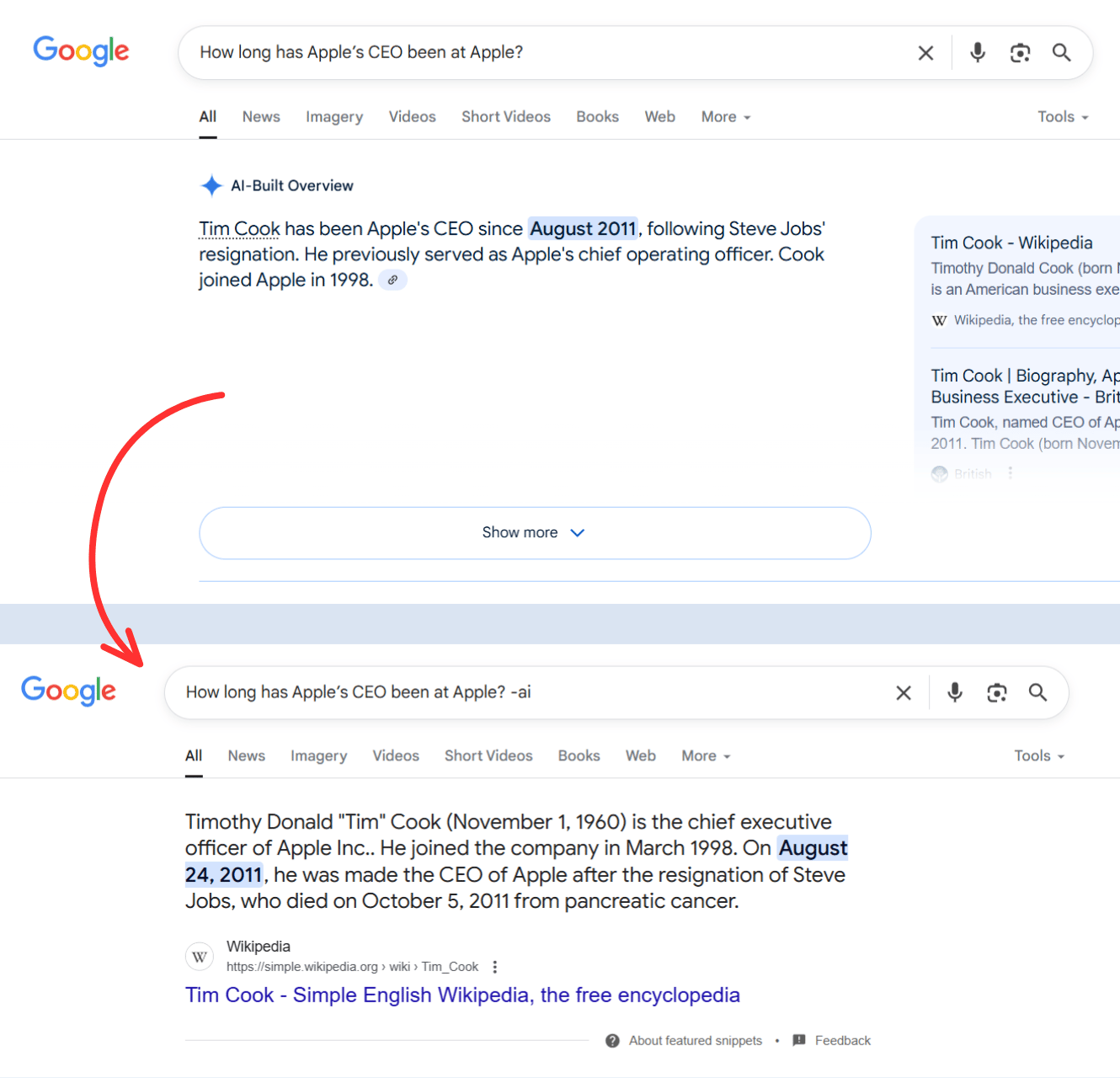
While the company still hasn't implemented an official "off" switch for Google Overviews, here are three ways you can get back to the classic search experience:
Add
-AIto your search
Works on: Desktop and mobile
This is the fastest fix. Just type -AI at the end of your query to stop the AI Overview from appearing.
Go to google.com or open the Google app
Type your search +
-AI(e.g.,how to turn off ACR on TV -AI)Hit Enter — you’ll get regular search results
You might see a featured snippet, but it won’t be a full AI Overview
Use Google’s Web tab (or make it default)
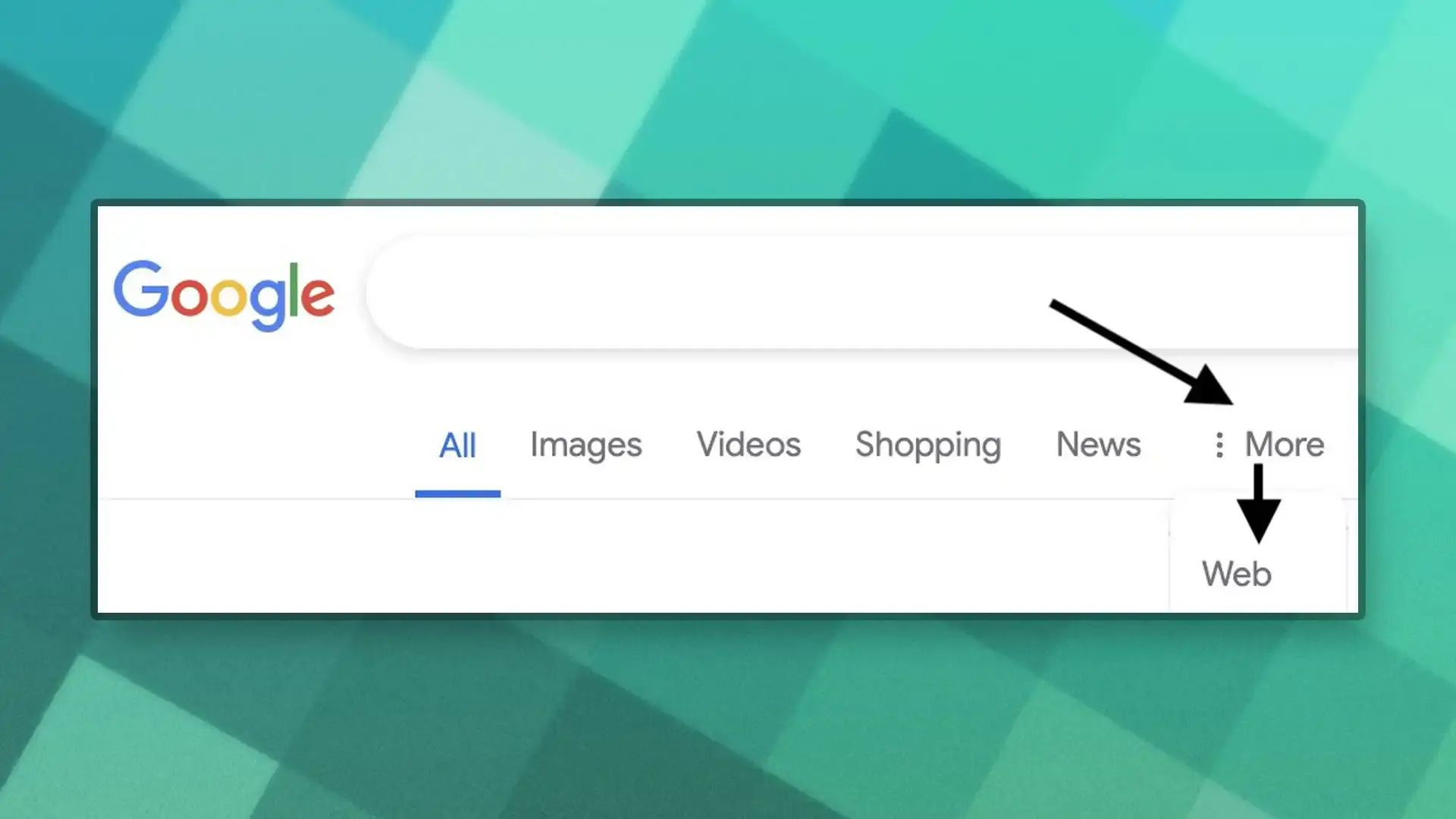
Works on: Desktop
The “Web” tab skips AI Overviews entirely — it’s just classic results. You can even make it default in your browser.
How to do it in Chrome:
Go to Settings > Search engine > Manage search engines and site search
Under Site search, click Add
Name: Google (Web)
URL: https://www.google.com/search?udm=14&q=%s
Save it, then click the 3-dot menu and choose Make default
Now every address-bar search skips AI Overviews. Firefox and Edge allow similar setups.
Install a Chrome Extension
Works on: Desktop
Some browser extensions block AI Overviews completely.
Go to the Chrome Web Store
Search for “Hide AI Overviews” or “Bye Bye, Google AI”
Click Add to Chrome, then refresh your search page
These also work in Microsoft Edge.
AI Tools to check out
🧠 MiroThinker: Don't just chat. Predict, verify, and discover with science-based AI.
🦾 Nonilion: AI agents working 24/7 so your ideas keep moving, even when you're not.
🚀 FluxTech: Generate images directly in your code editor using Flux by Black Forest Lab. No more switching between apps.
✅ SnapGrid: An open-source desktop app for collecting, organizing, and analyzing images and videos.
🌐 Vozo: AI-powered translation, dubbing, lip sync, and more — built for creators, marketers, and educators.
TOGETHER WITH MINTLIFY
Are you tracking agent views on your docs?

AI agents already outnumber human visitors to your docs — now you can track them.
AI Findings/Resources
💸 Ashton Kutcher turned $30M into $1.3 billion by investing early in OpenAI
🚀 China is winning one AI race, the US another - but either might pull ahead
The latest in AI and Tech
Tubi has become the first streaming platform to launch a native app within ChatGPT, allowing users to discover movies and TV shows through natural-language prompts.
The GLM-5.1 open-weight model was designed for complex, long-running coding tasks. It reviews its own progress, detects dead ends, and shifts approaches mid-task, allowing it to outperform rivals like OpenAI's GPT-5.4 and Anthropic's Claude Opus 4.6 on key coding benchmarks such as SWE-Bench Pro.
AI music startup Suno is facing tensions with major record labels like Universal Music Group and Sony Music Entertainment over how AI-generated songs should be distributed.
According to reports, labels want tracks to remain inside apps such as Suno, while Suno is pushing for users to freely share and distribute their creations across the internet.
A federal appeals court in Washington, D.C., denied the company's request to temporarily block the Department of Defense's blacklisting, complicating the legal battle between the U.S. government and one of the country's leading AI labs.
Google is rolling out a new “notebooks” feature for Gemini, designed to help users organize files, conversations, and instructions about specific topics in one place.
That’s a wrap!
We'd love to hear your thoughts on today's email!Your feedback helps us improve our content |
Not subscribed yet? Sign up here and send it to a colleague or friend!
See you in our next edition!
Gina 👩🏻💻