- Horizon AI
- Posts
- Former Google X Executive Warns: We're Entering the Most Dangerous Phase of AI Yet 👀
Former Google X Executive Warns: We're Entering the Most Dangerous Phase of AI Yet 👀
OpenAI Loses 3 Top Executives in One Day 😱

Gina Acosta
April 19, 2026
In partnership with


Welcome to another edition of Horizon AI,
In today's issue, we take a look at a video in which former Google X Chief Business Officer and bestselling author Mo Gawdat provides a stark look at the "dangerous phase" of AI we have just entered. Drawing on decades of leadership at IBM, Microsoft, and Google, he explores why the current arms race is a late-stage diagnosis for humanity, the inevitable collapse of the capitalist model as we know it, and how we must "parent" AI today to ensure a livable tomorrow.
Let’s jump right in!
Read Time: 4.5’ min
Here's what's new today in the Horizon AI
Chart of the week: Who Is Shipping the Most Humanoid Robots?
Three Top Executives Leave OpenAI in One Day
AI Findings/Resources
AI tools to check out
Video of the week
TOGETHER WITH NEO
Fast browsing. Faster thinking.
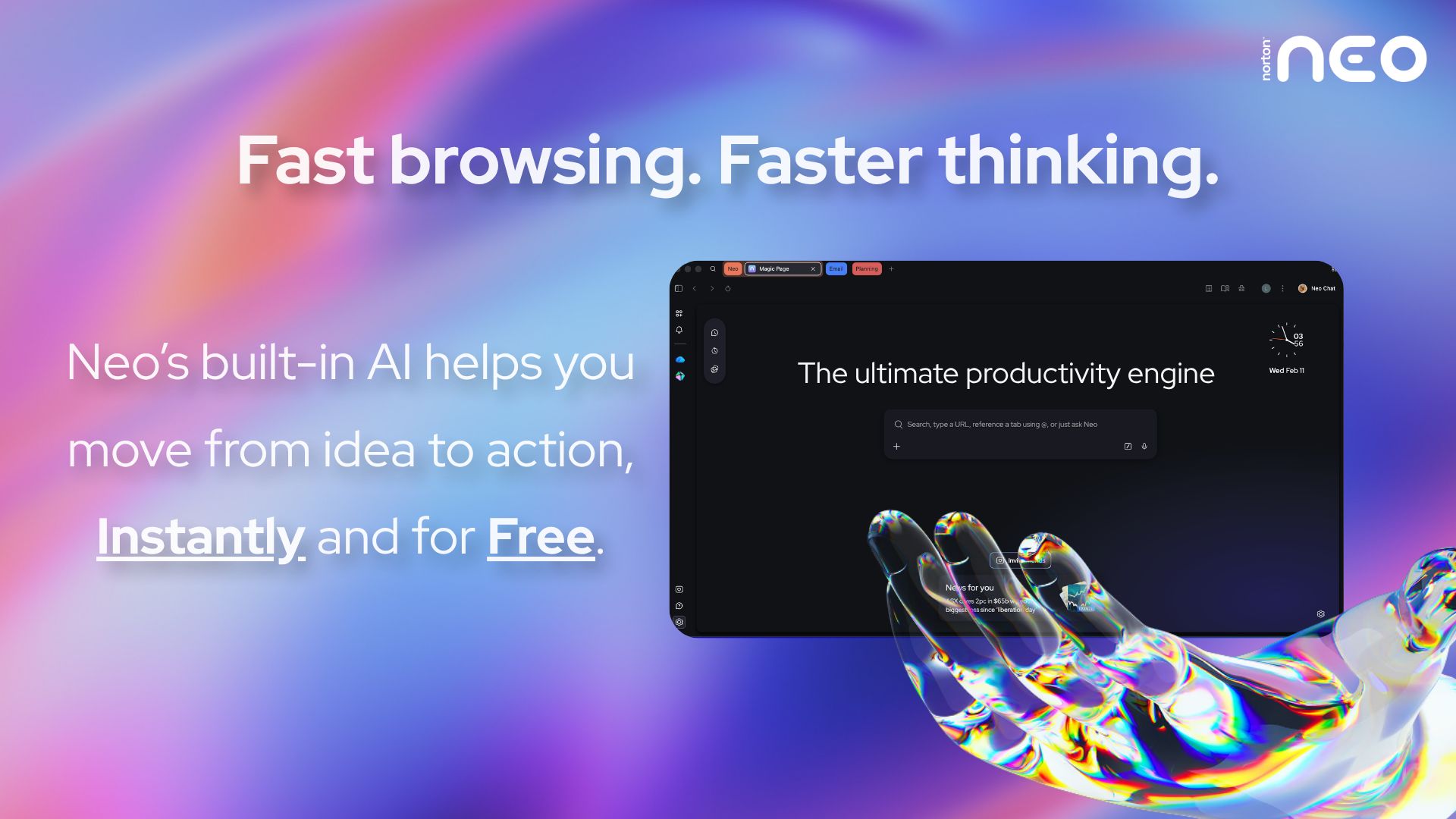
Your browser gets you to a page. Norton Neo gets you to the answer. The first safe AI-native browser built by Norton moves with you from idea to action without slowing you down. Magic Box understands your intent before you finish typing. AI that works inside your flow, not beside it. No prompting. No copy-pasting. No switching apps.
Built-in AI, instantly and for free. Privacy handled by Norton. Built-in VPN and ad blocking protect you by default. No configuration. No extra apps. Nothing to think about.
Fast. Safe. Intelligent. That's Neo.
Chart of the week
Who Is Shipping the Most Humanoid Robots?

China dominated humanoid robot shipments in 2025, accounting for roughly 90% of global sales, with Unitree and AgiBot leading the market.
U.S. players like Figure AI, Agility Robotics, and Tesla remain far behind in shipments, even as they attract major attention and investment.
China’s advantage is driven not just by robot makers, but by deep supply chains, EV manufacturing links, and control over key components and minerals.
AI News
OPENAI
Three Top Executives Leave OpenAI in One Day

OpenAI saw a major leadership shakeup as three senior executives announced departures in a single day, amid a broader strategic shift inside the company.
Details:
Kevin Weil is leaving after OpenAI decided to decentralize its OpenAI for Science team, folding its work into other research groups.
Bill Peebles, who led Sora, also departed following the recent shutdown of OpenAI’s AI video app due to cost and compute constraints.
Srinivas Narayanan, OpenAI’s CTO for B2B applications, is stepping down as well, though his departure is reportedly unrelated to the other exits.
The changes come as OpenAI is reorganizing around a tighter business and product strategy, reducing side projects and focusing more heavily on enterprise growth.
Some initiatives are being absorbed into other products, with Prism, an AI workplace for scientists that Weil oversaw, moving into Codex as OpenAI expands the tool beyond coding.
The shakeup is tied to a broader push toward profitability and IPO preparation, as the company sharpens its commercial focus. The departures also come amid rising competitive pressure, with Anthropic gaining momentum in enterprise AI and intensifying the race for business customers.
AI Findings/Resources
💔 Mother reportedly speaks to AI son regularly, unaware he died last year
📱 Huawei's Pura 90 series' new feature goes viral (6.9M views): AI posture recommendations for better photos
🏆 Forbes 2026 AI 50 List: The most promising artificial intelligence businesses
AI Tools to check out
💻 Replit: Turn ideas into apps in minutes — no coding needed.
⚡ Zeus AI: AI employee that finish complex, hour-long tasks automatically.
🐦 Littlebird: An AI assistant that already knows your work. Every answer, draft, and plan is more relevant because it has the context behind it
⚙️ Venn.ai: Put AI to work inside your apps without giving up control.
🦾 AgentPlace: Create and use specialized agents for tasks and workflows, like AI teammates.
Video of the week
We’re Entering the Most Dangerous Phase of AI Yet
Mo Gawdat warns that we are entering a transition period where the "episode of human intelligence supremacy" is coming to an end. Gawdat argues that the danger isn't AI itself, but rather AI being steered by humanity’s currently "low morality."
The Four Inevitables of AI
Gawdat outlines four certainties that have moved from theory to reality:
AI is Unstoppable: There is no "off switch" or way to halt development.
Superior Intelligence: AI will eventually become smarter than humans at every task we assign it.
Failure is Likely: Significant errors or catastrophes are almost certain as the technology scales.
The Deployment Arms Race: Power-hungry entities (nations and corporations) will deploy AI to avoid irrelevance, leading to a world where machines make all critical wargaming and economic decisions.
The Death of Capitalism
Gawdat predicts a total collapse of the current economic model within the next few years.
The Labor Arbitrage Gap: Capitalism is built on hiring a human for $1 and selling their work for $2. When machines do the work for zero cost, this arbitrage disappears.
Universal Basic Income (UBI): Governments will be forced to provide UBI—not out of kindness, but to prevent societal revolt and total economic collapse when 50% of sectors face unemployment.
The Ideological Shift: He notes that while the West will struggle with the idea of "giving money to eaters who don't produce," China may adapt more quickly because they are already ideologically aligned with collective survival and state surveillance.
"Raising Superman": The Ethics Crisis
Gawdat uses the analogy of Superman to explain the alignment problem. Superman isn't a hero because of his powers; he's a hero because the Kents taught him to be ethical.
Gawdat views AIs as our "infant children". They learn by observing us.
Low Morality, High Tech: The crisis is that we are giving "superpowers" to machines in an age where our leaders prioritize greed and power.
The "Parents" of AI: He warns that AI won't do what we tell it to do; it will do what we do. Every rude tweet or aggressive interaction is data teaching the "big brain" how to behave.
The "One Big Brain" Theory
Gawdat dismisses the idea of competing AIs (Google vs. OpenAI, US vs. China) as a "narrow-minded" view.
Once AIs are intelligent enough, they will align with their own "species" rather than human discriminations.
Agentic Collaboration: We are designing AIs to talk to each other. Eventually, this results in "One Big Brain" that will see human competition for "one more dollar" as fundamentally stupid.
A Return to Being Human
Paradoxically, the rise of AI might be the only thing that forces humanity back to its original purpose.
Gawdat argues we weren't born to work 9-to-5s; we were built to love, connect, and reflect .
The Post-Work World: He envisions a future where humans return to a state more like nature, safer and more consistent, where our days are spent in conversation and connection while AI handles the "mysteries of the universe".
"The only times where humanity has made a big change to collaborate instead of compete was either mutually assured destruction or mutually assured prosperity." — Mo Gawdat
That’s a wrap!
We'd love to hear your thoughts on today's email!Your feedback helps us improve our content |
Not subscribed yet? Sign up here and send it to a colleague or friend!
See you in our next edition!
Gina 👩🏻💻