- Horizon AI
- Posts
- Andrew Ng: The AI Hype Bubble Is Real and Could Trigger an AI Winter 🥶
Andrew Ng: The AI Hype Bubble Is Real and Could Trigger an AI Winter 🥶
The 10 Professions Most Exposed to AI, According to Anthropic 😱

Gina Acosta
March 08, 2026
In partnership with


Welcome to another edition of Horizon AI,
The conversation around AGI is filled with bold predictions and growing hype. In today's issue, we take a look at Andrew Ng's perspective on why AGI may still be decades away and what actually matters more in the current wave of AI development.
Let’s jump right in!
Read Time: 4.5’ min
Here's what's new today in the Horizon AI
Chart of the week: Job Postings For Software Engineers Are Rapidly Rising
10 Jobs at Highest Risk as AI Reshapes the Labour Market, According to Anthropic
AI Findings/Resources
AI tools to check out
Video of the week
TOGETHER WITH WISPR FLOW
Dictate code. Ship faster.

Wispr Flow understands code syntax, technical terms, and developer jargon. Say async/await, useEffect, or try/catch and get exactly what you said. No hallucinated syntax. No broken logic.
Flow works system-wide in Cursor, VS Code, Windsurf, and every IDE. Dictate code comments, write documentation, create PRs, and give coding agents detailed context- all by talking instead of typing.
89% of messages sent with zero edits. 4x faster than typing. Millions of developers use Flow worldwide, including teams at OpenAI, Vercel, and Clay.
Available on Mac, Windows, iPhone, and now Android - free and unlimited on Android during launch.
Chart of the week
Job Postings For Software Engineers Are Rapidly Rising
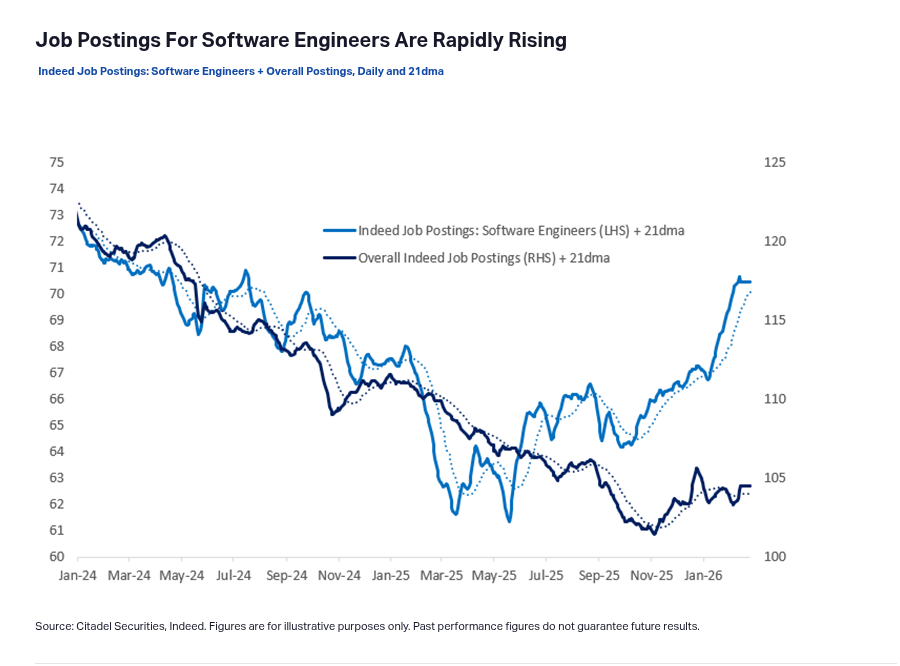
Job postings for software engineers are rising sharply, despite expectations that AI would reduce demand for coding roles.
This reflects the Jevons paradox: when AI makes software development cheaper, companies build more software, increasing demand for engineers.
However, it is likely that hiring is being targeted at senior or 'AI-literate engineers' who can use AI tools to multiply their output, rather than junior developers.
AI News
AI RESEARCH
10 Jobs at Highest Risk as AI Reshapes the Labour Market, According to Anthropic
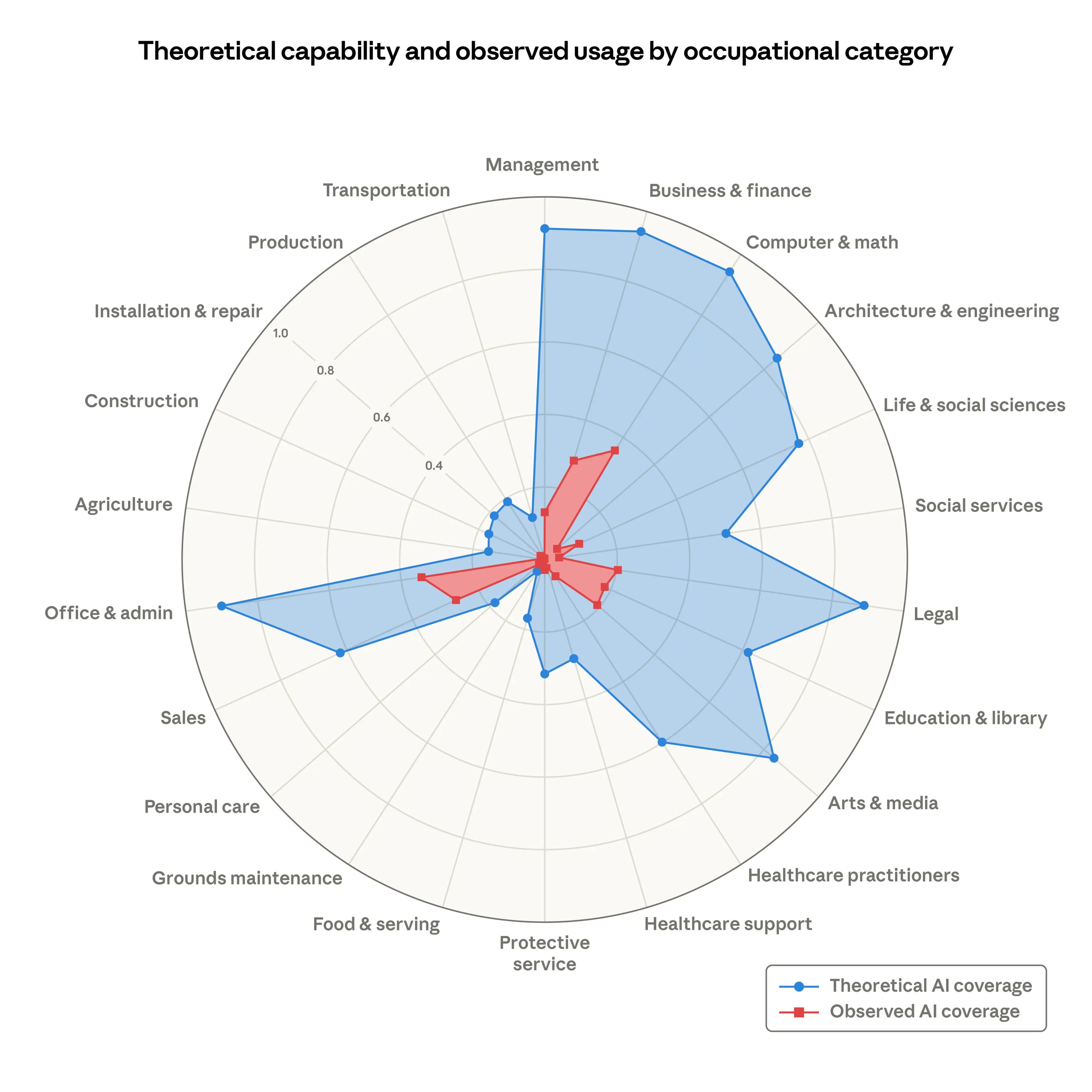
Theoretical capability and observed exposure by occupational category
A new report from Anthropic introduces a method to measure how AI may affect jobs, presenting early evidence from U.S. labor data at a time when AI tools are rapidly becoming embedded in the workplace.
Details:
The study introduces a metric called “observed exposure,” which combines theoretical AI capabilities with real-world usage data to estimate how much different occupations could be affected by AI.
The occupations facing the highest exposure to AI are largely concentrated in information-heavy or repetitive knowledge work. Computer programmers top the list at 75%, followed by customer service representatives at 70% and data entry keyers at 67%.
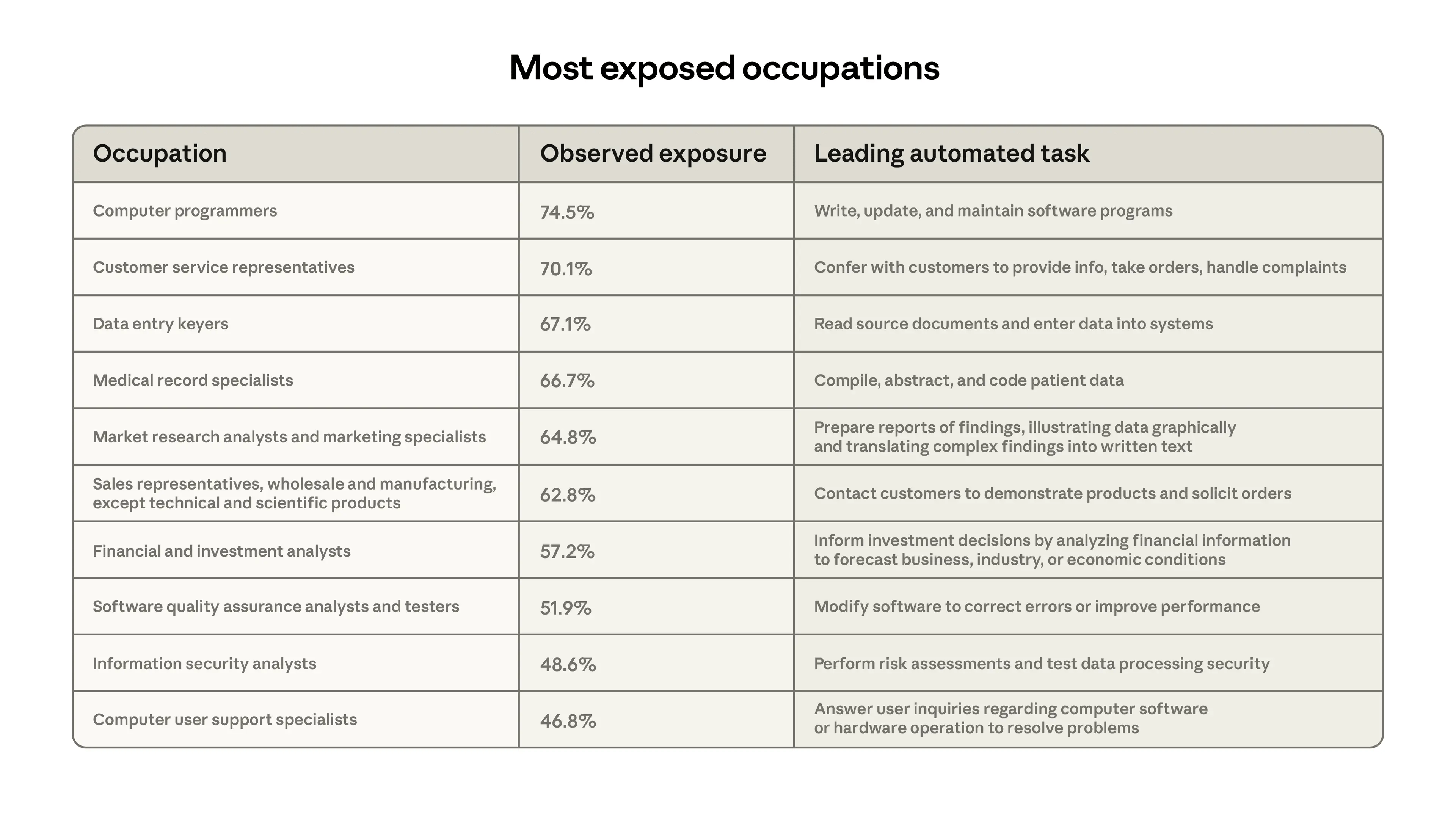
Top ten most exposed occupations
Meanwhile, the "safe" occupations are those roles requiring physical presence or unpredictable environments, such as cooks and mechanics, which show zero AI exposure.
The study notes that while AI is already reshaping how some work is performed, there is still little evidence of large-scale job displacement. Rather than eliminating roles entirely, specific tasks within these professions could be automated, potentially transforming how the work is done.
AI Findings/Resources
🤯 Cursor internal analysis shows how hard Anthropic is subsidizing Claude Code
📺 OpenArt Studios announces the first AI influencer reality show
🤖 The Agency, a growing collection of meticulously crafted AI agent personalities ready to transform your workflow
AI Tools to check out
💻 Interpreter: A desktop agent that can fill PDFs, edit your Excel and Word docs, and learn new skills.
👉 SkillForge: Turn screen recordings into agent skills.
🔍 Profound: Optimize your brand's visibility in AI search.
🦾 Devin: An autonomous AI software engineer that can write, run and test code.
👀 git-lrc: Free, unlimited AI code reviews that run on commit.
Video of the week
The Bubble Is Real And Could Trigger an AI Winter
In this insightful interview, Andrew Ng, a pioneer of modern AI (founder of Google Brain and DeepLearning.AI), provides a grounded counter-perspective to the common alarmism surrounding AGI. He argues that while AI is incredibly valuable, the "bubble" of hype could lead to a disappointing "AI Winter" if expectations aren't managed.
The "Marketing Term" of AGI
Ng believes the current obsession with AGI is more about PR and fundraising than technical reality.
Ng notes that while some claim AGI is near, they often do so by "lowering the bar" of the definition.
He proposes a new "Turing Test" for AGI: Could an AI function as a remote worker, completing a multi-day "onboarding" and performing useful economic tasks as well as a skilled professional?.
By any "reasonable" definition (matching human intelligence in every dimension), Ng believes we are still decades away from AGI.
The Mechanics of "Agentic AI"
While others focus on making models "smarter" through raw scale, Ng is betting on agentic workflows.
Ng was an early architect of the "scale" era at Google Brain, but he argues that scaling laws are hitting diminishing returns because AI has already "read the entire internet".
Workflow vs. Model: He argues that a "smart workflow" (breaking a task into steps with loops and tools) often outperforms a "smart model" used in a single shot.
Instruction Removal: In a surprising trend, Ng’s teams are finding that as models improve, they actually remove guardrails and detailed instructions, letting the AI "decide for itself" how to solve a problem.
The Economic and Social Shift
Ng addresses the fear of job replacement with a more nuanced "task-based" view.
The 30% Rule: Most jobs won't disappear; instead, AI will automate 30–40% of the tasks within those jobs. The human remains, but they must use AI to stay competitive.
The "At-Risk" Minority: He candidly admits that roles like translators, voice actors, and call center workers are in genuine danger of near-total automation.
Ng's biggest worry is that universities are still training students for "the jobs of 2022," leaving them unequipped for an AI-integrated workforce.
The Geopolitics of Open Source
The landscape of AI power is shifting toward a more open, yet complex, international dynamic.
The China Factor: Ng points out that while the US leads in proprietary models (like GPT-4), China is currently leading in the Open Source/Open Weight movement.
Preventing Oligarchy: He views open source as the essential "key" to preventing a future where only two or three companies act as "gatekeepers" to innovation, similar to the iOS/Android duopoly in mobile.
The Nature of Intelligence
Despite building the world's most advanced systems, Ng remains humble about what we actually know.
Neuroscience vs. AI: Ng reveals that before starting Google Brain, he spent years studying neuroscience but concluded that "neuroscience has no idea how the brain works".
The Unsolved Mystery: He is certain that human intelligence is not just a "transformer network with scaling laws," and he admits we still don't understand the fundamental "mechanism" that allows biological brains to learn so efficiently from so few examples.
That’s a wrap!
We'd love to hear your thoughts on today's email!Your feedback helps us improve our content |
Not subscribed yet? Sign up here and send it to a colleague or friend!
See you in our next edition!
Gina 👩🏻💻