- Horizon AI
- Posts
- 2029 Prediction: AI Will Make Plumbers Earn More Than Lawyers 🔮
2029 Prediction: AI Will Make Plumbers Earn More Than Lawyers 🔮
Anthropic asked 81,000 people what they think about AI 👀

Gina Acosta
March 22, 2026
In partnership with


Welcome to another edition of Horizon AI,
In today's issue, we cover entrepreneur Daniel Priestley's bold predictions about how AI will reshape the global economy by 2029, from the collapse of white-collar dominance to why plumbers may soon out-earn lawyers, and what you can do right now to make yourself AI-proof.
Let’s jump right in!
Read Time: 4.5’ min
Here's what's new today in the Horizon AI
Chart of the week: The Countries with the Most Supercomputers
Anthropic Study of 81,000 People Reveals Mixed Feelings About AI
AI Findings/Resources
AI tools to check out
Video of the week
TOGETHER WITH GLADLY
88% resolved. 22% stayed loyal. What went wrong?

That's the AI paradox hiding in your CX stack. Tickets close. Customers leave. And most teams don't see it coming because they're measuring the wrong things.
Efficiency metrics look great on paper. Handle time down. Containment rate up. But customer loyalty? That's a different story — and it's one your current dashboards probably aren't telling you.
Gladly's 2026 Customer Expectations Report surveyed thousands of real consumers to find out exactly where AI-powered service breaks trust, and what separates the platforms that drive retention from the ones that quietly erode it.
If you're architecting the CX stack, this is the data you need to build it right. Not just fast. Not just cheap. Built to last.
Chart of the week
The Countries with the Most Supercomputers
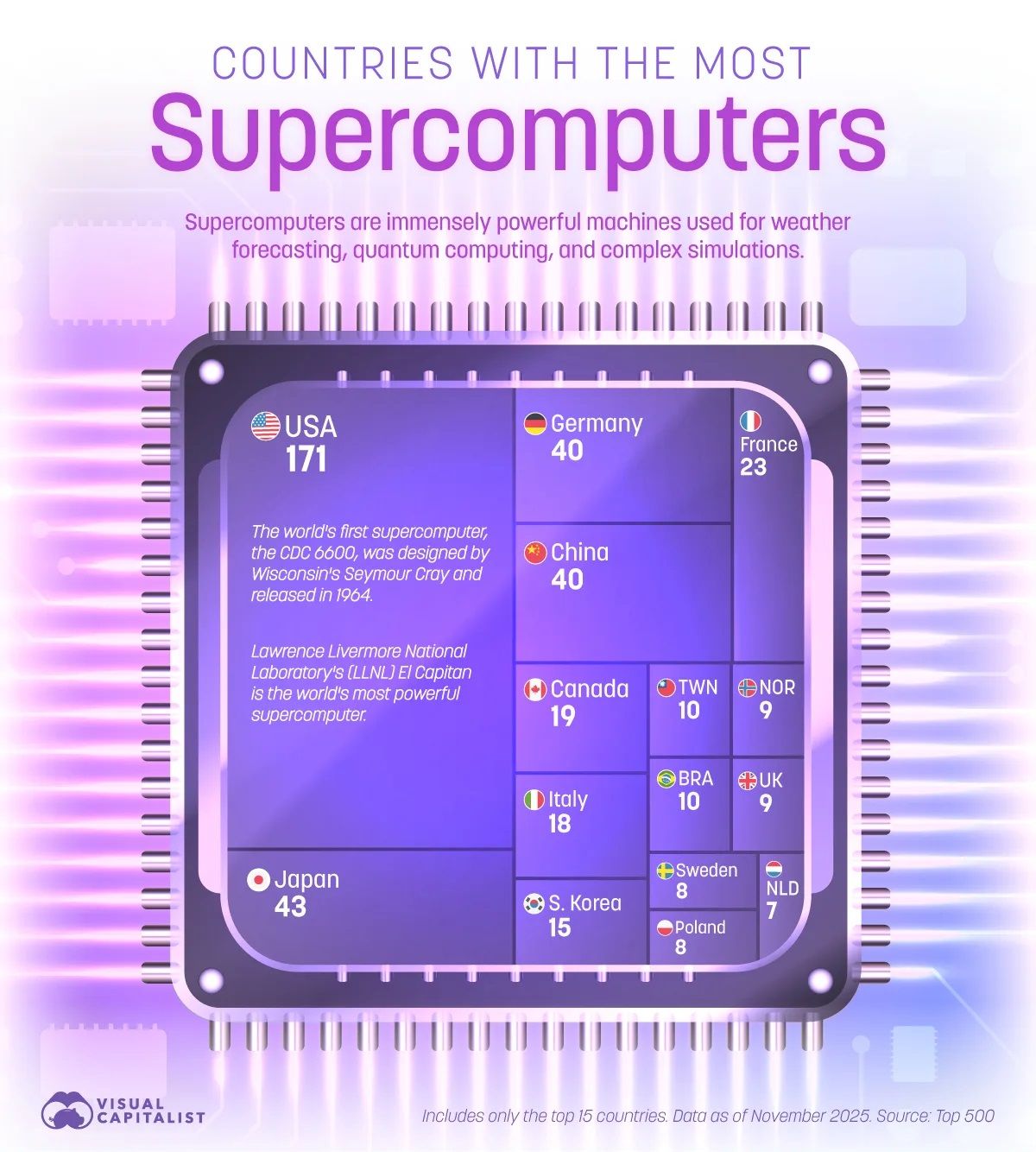
The U.S. dominates globally with 171 supercomputers, far ahead of Japan, Germany, and China, highlighting a highly concentrated landscape.
Demand for supercomputers is growing alongside AI, which requires massive computational power to train and run, far surpassing what regular computers are capable of.
AI News
ANTHROPIC
Anthropic Study of 81,000 People Reveals Mixed Feelings About AI
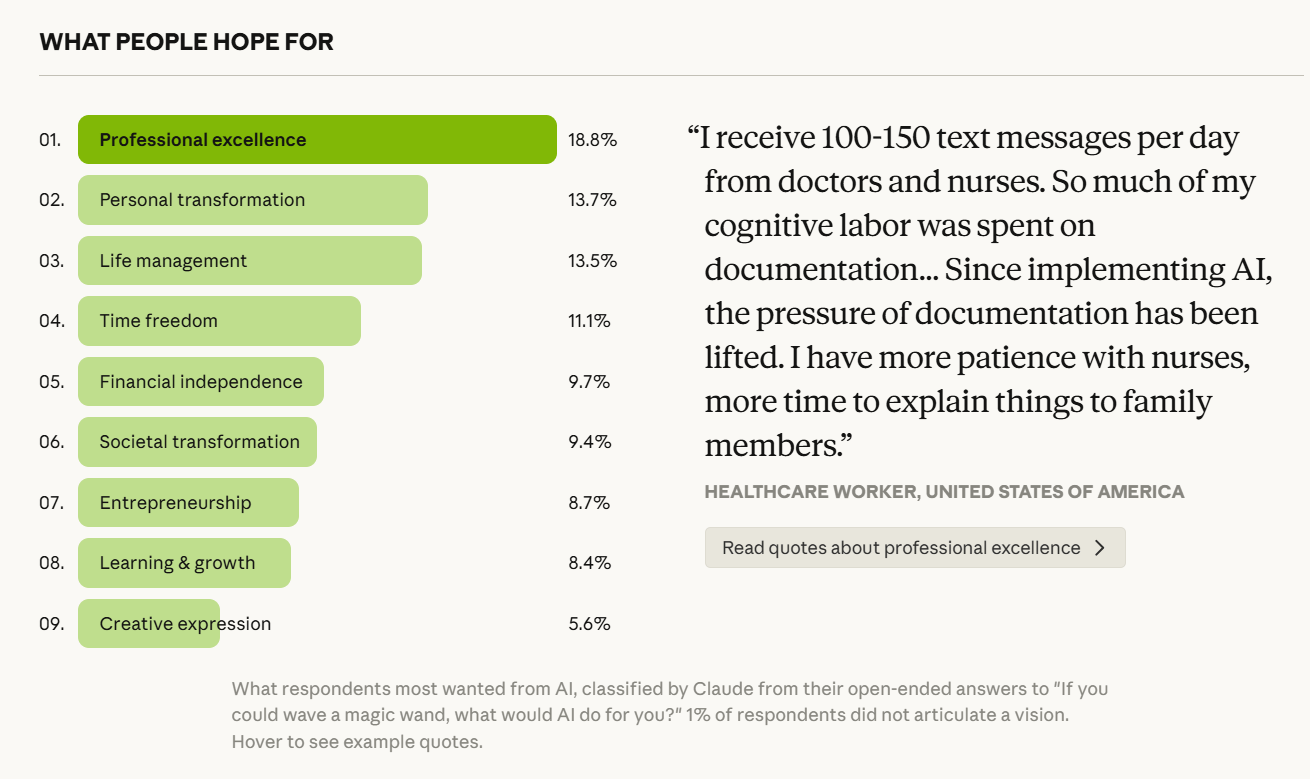
A new study from Anthropic, based on responses from more than 80,000 people across 159 countries, shows that people's views on AI are deeply divided, often valuing and fearing the same things at once.
Details:
The report highlights a “light and shade” dynamic: users appreciate AI for support and productivity, but also fear becoming dependent on it.
Many respondents use AI for emotional support or communication, while others rely on it to automate work tasks and save time.
At the same time, concerns are widespread, especially around losing critical thinking skills, over-reliance, and AI making incorrect decisions.
The biggest fears include reliability issues (27%), job and economic impacts (22%), lack of human oversight (22%), cognitive decline (16%), and weak regulation (15%).
Globally, 67% of respondents view AI positively, though wealthier regions like North America and Western Europe show more concern about job loss, regulation, and surveillance, while regions like Sub-Saharan Africa, Latin America and South Asia are more optimistic, seeing AI as a tool for economic opportunity and access.
AI Findings/Resources
📝 Lessons from building Claude Code: How we use skills
🔍 Reddit CEO says the company is considering requiring Face ID to verify users are human and crack down on AI bots
🔇 A North Carolina man pleaded guilty to using AI to generate songs and bot accounts to stream them billions of times, netting millions in royalties.
🐮 AI cow collar startup Halter has raised funding at a $2 billion valuation, using GPS-enabled devices and its “Cowgorithm” platform to automate cattle movement and track livestock health.
AI Tools to check out
👉 Fabricate: Build complete web applications with AI. Describe your app idea and get production-ready React, TypeScript, and backend code in minutes.
🦾 Renamer: Rename PDFs, photos & documents instantly with AI.
🏡 Room Design: Transform any room instantly with AI. Upload a photo, choose a style, and visualize your future home with photorealistic precision.
⚡️ Kodo: Create professional designs instantly with AI.
📹 Edit with Ava: AI-powered video editing on autopilot. Transform your raw footage into professional videos with a single prompt.
Video of the week
Daniel Priestley Predicts AI Could Flip the Job Market by 2029
Entrepreneur and business strategist Daniel Priestley discusses the seismic shift AI is bringing to the global economy. He moves from the macroeconomic risks of a "financial collapse" to a surprising prediction: that physical, "blue-collar" expertise will become the ultimate luxury in a world saturated with digital intelligence.
The "Plumber vs. Lawyer" Paradigm (2029 Prediction)
Priestley argues that AI is fundamentally devaluing intellectual labor while elevating physical, non-automated skills.
For decades, white-collar professions (law, finance, administration) were the gold standard. By 2029, Priestley predicts plumbers, electricians, and bricklayers will regularly out-earn lawyers because their skills cannot be "Walmartized" or sent to a server farm.
He describes AI as an "alien" capable of making intellectual qualifications redundant almost instantaneously. Unlike the Industrial Revolution, which took decades to build infrastructure, AI's disruption is instantaneous once a model "learns" a task.
The 2029 Financial "Bare Case"
Perhaps the most sobering part of the interview is Priestley's warning about the fragile economic model supporting AI.
The Infrastructure Trap: Historically, when an economy spends more than 3% of its GDP on a new infrastructure (like railways or electricity), it often faces a brief 10-year bankruptcy period.
Unlike roads or tracks that last 50–100 years, the "big ginormous computers" powering AI need to be replaced every 3 to 4 years.
The Imbalance: We are spending $650 billion on hardware that depreciates almost immediately, while only a small fraction of users (about 5%) are willing to pay for it. This creates a high risk of a massive financial collapse by 2029.
The "Fog" and the Personal Brand
Priestley uses a powerful metaphor to explain how individuals can survive the coming transition.
The Airport Fog: He compares the AI transition to a fog rolling into an airport. If your "airplane" (your career or brand) is already above the fog, you can keep flying. If you haven't "taken off" yet, you will be grounded.
Personal Branding: This isn't about being an "influencer." It’s about positioning yourself so that a specific group of people knows who you are and what you do, making you "AI-proof" through human trust and reputation.
The Entrepreneurial Survival Kit
Priestley outlines how everyone (even those in corporate jobs) needs to start thinking like an entrepreneur to survive.
Validation over Guesswork: Most "rookie" entrepreneurs fail because they don't validate their ideas. The key is to prototype and test ideas as fast and cheap as possible .
Intrapreneurship: People inside big corporations should act as if they are "spinning out" new products, using AI to prototype at a speed that was previously impossible.
The Human Core: Relationship over Technology
The conversation ends on a deeply personal note about what actually remains when technology disrupts everything else.
The "Dots" on the Rock: Priestley reflects on the fact that we are all just "little dots" on a rock moving through time together. In the end, legacy isn't about financial structures; it's about "touching voice notes" and the relationships we leave behind.
Intergenerational Consciousness: He views "family formation" and the passing on of consciousness as the ultimate core of happiness, something technology can supplement but never replace.
That’s a wrap!
We'd love to hear your thoughts on today's email!Your feedback helps us improve our content |
Not subscribed yet? Sign up here and send it to a colleague or friend!
See you in our next edition!
Gina 👩🏻💻